
Views: 0 Author: Site Editor Publish Time: 2026-08-27 Origin: Site


Navigating the complex landscape of pet food packaging materials requires precision and foresight. Manufacturers must balance strict thermal processing demands against growing consumer desires for convenience and sustainability. Balancing retort sterilization requirements with modern shelf-appeal is the ultimate industry challenge.
Selecting the wrong material often leads to disastrous operational consequences. Packaging failures during production or transit cause microbial contamination. These failures drastically compromise shelf life and trigger brand-damaging recalls. You simply cannot afford to cut corners when sealing and sterilizing wet diets.
This article explores the technical and commercial realities of modern packaging options. We will evaluate tinplate, flexible plastics, and advanced aluminum systems. You will learn how to choose the ideal material to optimize your production lines and satisfy strict market regulations.
Wet pet food presents unique manufacturing challenges. The high moisture content creates a perfect environment for bacterial growth. Packaging must act as an impenetrable fortress. We must engineer these materials to survive brutal processing conditions.
Thermal tolerance remains the most critical engineering requirement. Filled pouches and trays enter a retort chamber for commercial sterilization. They face core temperatures of 121°C (250°F) or higher. The pressure inside these chambers spikes dramatically during the heating cycle. Packaging materials must survive this extreme environment flawlessly. They cannot deform, melt, or shrink. If a material warps, it compromises the structural integrity. Melting causes catastrophic line shutdowns and ruins equipment. Delamination separates the protective layers and instantly destroys the sterile barrier.
Oxygen degrades animal fats rapidly. Moisture loss ruins the carefully formulated texture of wet food. UV light accelerates the breakdown of essential vitamins and nutrients. Therefore, your packaging must provide an absolute barrier. It must block 100% of oxygen, moisture, and light. This absolute protection prevents fat oxidation and spoilage. It guarantees a stable 12- to 24-month shelf life. Even microscopic pinholes render the barrier useless. A compromised barrier invites rapid bacterial colonization and product discoloration.
Wet pet food formulas are highly demanding. Recipes often contain high levels of fats and oils. Many specialized diets feature dense protein structures. Some wet food formulations are highly acidic. The inner contact layer of the packaging touches this food constantly. This layer must remain completely chemically inert. It must not react with the food under any circumstances. You must ensure zero migration of packaging compounds into the pet food. Migration changes the product flavor and poses severe health risks to animals.
The industry relies on three main packaging formats. Each offers distinct advantages and presents specific operational challenges. We must analyze these options to match them with your production goals.
Tinplate steel cans represent the historical backbone of the wet food industry. They offer maximum physical durability during transit. Cans utilize globally recognized and highly efficient recycling streams. They provide an exceptionally long shelf life due to their rigid structural barrier. However, steel cans have significant drawbacks. They carry a very high shipping weight. This dead weight increases transportation costs and carbon emissions. They also offer lower consumer convenience. Opening traditional cans often requires external tools and leaves sharp, dangerous edges.
Flexible pouches dominate the modern budget and mid-tier markets. These pouches feature complex, multi-layer structures. They typically use a layer of PET for outer physical strength. They incorporate a middle layer of aluminum foil or EVOH for the core barrier. They finish with an inner layer of CPP (cast polypropylene) for reliable heat sealing. Pouches are extremely lightweight. They offer an excellent product-to-package weight ratio and allow for highly customizable shapes. Unfortunately, these complex multi-layer structures are notoriously difficult to recycle. They also remain prone to accidental puncture if warehouse staff mishandle them during transit.
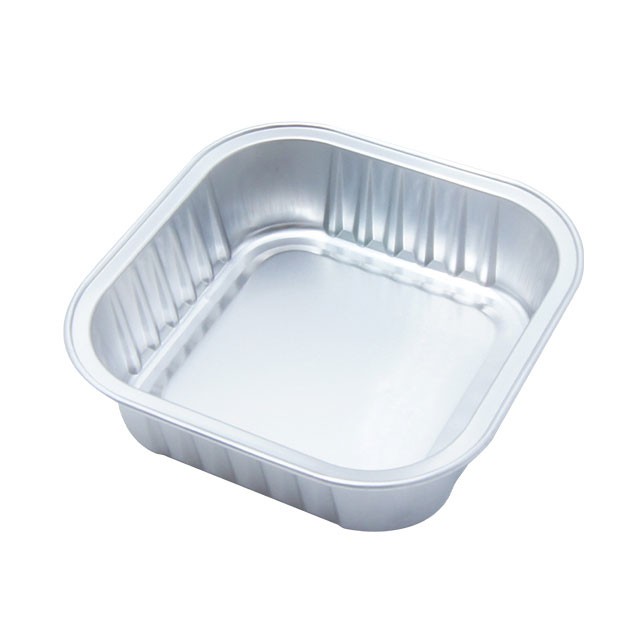
Semi-rigid aluminum systems bridge the gap between cans and pouches. This structure relies on formed aluminum trays paired with specialized lidding films or foils. These systems deliver a premium aesthetic on the retail shelf. They easily scale for high-volume, single-serve portions. Aluminum is infinitely recyclable without losing its material properties. Furthermore, aluminum offers excellent heat transfer during sterilization. This rapid conductivity reduces overall retort time and saves processing energy.
Comparison of Primary Wet Pet Food Packaging Options
| Material Format | Durability | Barrier Quality | Recyclability | Consumer Convenience |
|---|---|---|---|---|
| Tinplate/Steel Cans | Very High | Absolute | Excellent | Low (Often needs tools) |
| Flexible Retort Pouches | Moderate (Puncture risk) | High | Poor (Multi-layer plastic) | High (Easy tear) |
| Semi-Rigid Aluminum | High | Absolute | Excellent | Very High (Easy peel) |
Aluminum represents the gold standard for premium wet diets. Its unique metallurgical properties solve many common manufacturing headaches. We see widespread adoption across top-tier brands.
Modern pet food aluminum foil containers are highly favored for premium and single-serve wet food lines. They maintain excellent structural integrity on the filling line. Their rapid thermal conductivity is a major asset. Heat penetrates the aluminum quickly and evenly. This minimizes the total energy used during the retort sterilization phase. Faster heating and cooling cycles increase your overall daily throughput.
To withstand extreme processing, manufacturers rely on sterilizable aluminium foil. Suppliers engineer this material specifically to endure severe pressure differentials inside retort chambers. The foil stretches and flexes slightly without compromising its microscopic barrier structure. This flexibility prevents micro-fractures that would otherwise invite oxygen ingress.
The top seal is just as critical as the container body. An engineered aluminum foil heat seal lid is critical for consumer convenience. It provides a highly desired easy-peel experience while maintaining an absolute hermetic seal. However, it requires highly precise application. You must calibrate heat sealers accurately. This ensures the lid withstands internal retort pressure expansion without bursting open.
Portion control is driving the market forward. The 125ml aluminum pet food container has emerged as a definitive global standard. It perfectly sizes single-serve meals for felines and small-breed canines. This standardized volume optimizes raw material waste during filling. It also maximizes consumer convenience by eliminating messy, half-empty cans in the refrigerator.
Selecting a material goes beyond technical specifications. You must align your packaging format with market expectations and regulatory landscapes. We evaluate materials based on compliance and user experience.
You must actively assess regional packaging regulations before launching a product. Global mandates increasingly penalize non-recyclable materials. Multi-layer plastic pouches face increasing regulatory pushback, particularly in markets like the European Union. These structures combine incompatible materials that recycling facilities cannot separate. Conversely, aluminum offers a highly straightforward recyclability profile. Municipalities globally accept aluminum trays and lids. Transitioning to mono-materials or aluminum systems future-proofs your brand against impending plastic taxes.
We must strongly evaluate the "frustration-free" aspect of your packaging. Pet owners interact with wet food daily. They resent messy, difficult packaging. Easy-peel lids provide a frictionless opening experience. Smooth-edge containers eliminate the fear of accidental cuts during feeding. Single-serve portions appeal directly to owners of small breeds. These positive interactions drive repeat purchases far more effectively than traditional, hard-to-open cans.
Switching or upgrading your packaging material introduces production risks. The filling and sealing environment is inherently chaotic. You must prepare your facility for these specific engineering hurdles.
In wet food manufacturing, high-speed filling gets messy. Gravy and meat chunks often splash onto the container's seal flange. Materials must allow for secure sealing even in these less-than-perfect conditions. Some polymer sealants can push through minor fat contamination to bond successfully. If your material requires a perfectly clean flange, you will experience high failure rates. In such cases, you must heavily upgrade your filling equipment with anti-splash nozzles.
The cooling cycle of a retort process is violent. Pressure drops rapidly as cold water floods the chamber. Using sub-standard multi-layer materials often results in disaster here. Improper heat seal settings weaken the lid bond. During the pressure drop, trapped gas inside the container expands rapidly. This causes poorly sealed lids to pop right off. It also causes inferior multi-layer films to separate and delaminate completely.
Changing packaging formats is rarely a plug-and-play operation. Transitioning from rigid metal cans to semi-rigid aluminum or flexible pouches requires significant capital expenditure. You cannot use a can seamer for aluminum trays. You must invest heavily in specialized modified atmosphere packaging (MAP) equipment. You will also need advanced heat-sealing machinery. These machines require distinct maintenance schedules and highly trained operators.
Choosing the correct wet food packaging dictates your product's market success. You must weigh technical durability against modern consumer demands. Choose tinplate steel for maximum volume output and the lowest unit cost. Select flexible retort pouches when maximum logistics efficiency and lightweight shipping are your primary goals. However, choose semi-rigid aluminum for premium brand positioning, optimal recyclability, and perfect portion control.
Do not finalize your procurement based on supplier datasheets alone. We strongly recommend conducting rigorous thermal penetration tests in your own retorts. Perform extensive seal-integrity trials with your packaging partners. Validate the physical performance before committing entirely to a new material structure.
A: Aluminum provides an absolute barrier to oxygen, moisture, and light. It withstands the extreme heat and pressure of retort sterilization flawlessly. It conducts heat very efficiently, which speeds up processing times. Furthermore, it is infinitely recyclable and highly valued by consumers for convenience.
A: Traditional multi-layer retort pouches (containing PET, Aluminum, and CPP) are generally not recyclable in standard municipal streams. The distinct layers cannot be separated easily. The industry is currently working toward mono-material solutions, though these often sacrifice some necessary heat tolerance.
A: Swelling indicates a severe loss of sterility. It stems from a microscopic seal failure, a pinhole leak in the material, or under-processing during the retort phase. These failures allow gas-producing bacteria to grow inside the package, expanding it outward.


