
Views: 0 Author: Site Editor Publish Time: 2026-08-28 Origin: Site


Wet pet food demands exceptionally rigorous packaging standards. The high moisture and nutrient-dense fat content make these delicate formulas highly susceptible to oxidation and rapid spoilage. Selecting the wrong container material or specification can lead to disastrous consequences for manufacturers. Poor choices frequently result in severely compromised shelf life, disastrous retort seal failures, and serious regulatory compliance violations. Procurement managers and packaging engineers need a dependable strategy. We provide a comprehensive technical evaluation framework to help you navigate this complex sourcing process. You will learn how to effectively assess and source optimal packaging solutions. We balance crucial factors like absolute barrier performance, seamless production line compatibility, and strict regulatory compliance. Master these key elements to ensure your premium wet formulas reach end consumers safely while maintaining peak nutritional integrity and brand reputation.
High moisture and fat content in wet pet food present unique preservation challenges. These rich formulas accelerate microbial growth rapidly if exposed to oxygen or light. Lipid oxidation ruins product palatability. It also destroys essential fatty acids necessary for animal nutrition. You must select packaging materials capable of blocking out environmental factors entirely.
Thermal processing introduces another severe hurdle. Facilities use retort sterilization to ensure shelf stability. Packaging must survive extreme heat and pressure during this critical process. Temperatures often exceed 121°C. Substandard materials suffer from warping, micro-cracking, or catastrophic seal failures. You need structural stability to survive these rigorous heating and cooling cycles.
Many brands debate using rigid plastics versus foil alternatives. You should carefully assess the barrier limitations of rigid plastics. Plastics possess measurable oxygen transfer rates (OTR). Over time, microscopic amounts of oxygen permeate plastic walls. This slow ingress degrades product quality long before the stated expiration date.
Aluminum offers distinct engineering advantages. It provides structural stability during rapid temperature fluctuations. Its superior thermal conductivity allows faster heating and cooling cycles on the production line. This efficiency saves substantial energy and processing time.
Sustainability plays a massive role in modern packaging decisions. Consumers actively seek environmentally friendly products. Aluminum boasts infinite recyclability without losing structural integrity. This aligns perfectly with evolving consumer demands. It also helps companies meet strict extended producer responsibility (EPR) regulations globally.
Material Performance Comparison Chart
| Performance Metric | Rigid Plastic (PP/PET) | Aluminum Foil |
|---|---|---|
| Oxygen Barrier (OTR) | Low to Moderate | Absolute Zero |
| Light Protection | Requires opaque additives | 100% Opaque |
| Thermal Conductivity | Poor (slower retort cycles) | Excellent (fast retort cycles) |
| Recyclability | Degrades over recycling cycles | Infinitely recyclable |
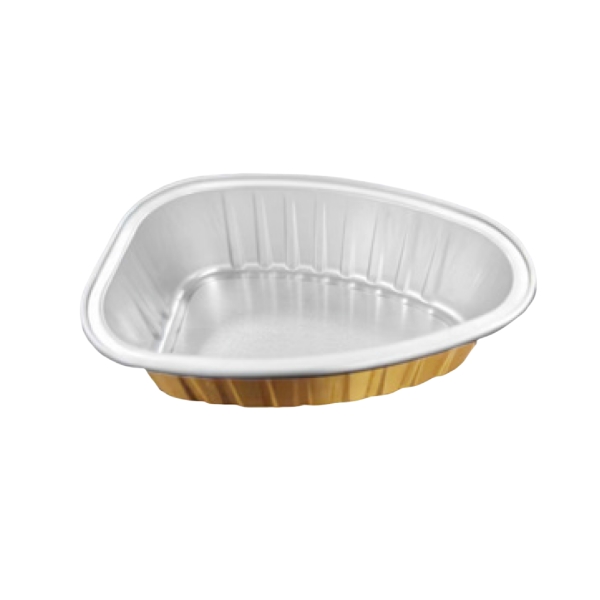
Evaluating standard dimensions requires understanding your end consumer. You must base decisions on the target animal, optimal meal size, and retail shelf-display requirements. Sizing dictates the physical footprint on grocery shelves. It also influences how owners feed their pets daily. Selecting the correct pet food aluminum foil containers involves careful volume-to-format matching.
This compact size serves very specific market segments. Brands frequently use the 50ml round pet food container for single-serve cat treats. It is equally popular for premium broths or highly concentrated nutritional supplements.
The primary advantage lies in maximum product extraction. The smooth, round interior allows pet owners to scoop out every drop of product easily. This design minimizes consumer waste significantly. It serves as an ideal format for trial-size SKUs. You can introduce new flavors to the market with minimal risk.
This capacity represents the workhorse of the industry. The 110ml aluminum pet food container perfectly fits standard single-serve wet meals. Manufacturers commonly use it for adult cats or small dog breeds. It handles both pâté textures and chunky meats suspended in thick gravy.
Its main advantage is broad operational compatibility. This size possesses an industry-standard footprint. It integrates seamlessly into most existing automated filling equipment. You rarely need to modify machinery to accommodate this universal shape. It stacks efficiently on retail shelves, maximizing brand visibility.
Larger animals require distinct packaging strategies. The 195ml square pet food container caters beautifully to multi-serve portions. It also functions perfectly as a complete single meal for medium-sized dogs.
Square formats provide incredible logistical advantages. They optimize palletization far better than round alternatives. You can pack more units into a standard shipping carton. This geometric efficiency translates directly to retail shelf space. Stores can display higher inventory volumes per linear foot. Square containers maximize physical real estate effectively.
You cannot judge a container solely by its exterior appearance. Technical engineers must evaluate structural and chemical characteristics rigorously. We recommend focusing on three core areas during your sourcing process.
Raw metal must never touch wet food directly. You must verify the presence of BPA-free, food-grade lacquers. Manufacturers typically use PP (Polypropylene) or PET (Polyethylene Terephthalate) lamination techniques. You need to ensure the coating prevents acidic or alkaline wet ingredients from reacting. A chemical reaction degrades the raw aluminum and taints the food entirely.
The rim structure dictates your sealing success. You must carefully assess the flange design. Smooth-wall containers offer far superior hermetic heat-sealing capabilities compared to wrinkle-free designs. You must match the container flange perfectly to compatible peel-off lids. Whether using aluminum foil lids or composite films, precision prevents retort bursting. A mismatched flange guarantees costly production line failures.
Material thickness determines physical resilience. You must calculate the required micron thickness accurately. Base this calculation on container volume and anticipated supply chain transit stresses. Thicker gauges prevent denting during transportation. Thin walls might save material weight, but they risk catastrophic failure during the pressurized retort cooling phase.
Introducing new packaging requires careful manufacturing audits. Even the best materials fail if they clash with your existing machinery. You must evaluate potential bottlenecks before committing to bulk orders.
Regulatory compliance protects your brand from severe legal liabilities. Packaging materials require the same scrutiny as the food ingredients themselves. You must demand transparency from every supplier you engage.
You need documented evidence of regulatory compliance. Suppliers must provide certificates proving adherence to FDA guidelines. These guidelines dictate proper storage and direct food contact material safety. If you sell internationally, you also need EU standard certifications. The European Union strictly limits heavy metal migration in consumer packaging.
Supplier validation requires rigorous documentation. Always require verifiable migration test reports. Specifically, ask for the Overall Migration Limit (OML) results. This proves chemical compounds do not leach into the food under extreme heat.
You should also assess supplier defect rates thoroughly. Review their Acceptable Quality Limit (AQL) standards. Insist on clear traceability protocols. If a defect occurs, you need batch numbers stamped clearly. This allows rapid, targeted recalls rather than disastrous nationwide product withdrawals.
Compliance Document Checklist
| Document Type | Purpose | Regulatory Body |
|---|---|---|
| FDA 21 CFR Declaration | Ensures food contact safety of internal lacquers. | US FDA |
| OML Test Report | Proves zero chemical leaching during retort. | EU / Independent Labs |
| AQL Inspection Certificate | Defines acceptable defect thresholds per batch. | Internal / ISO Standards |
| MSDS (Material Safety) | Details raw material composition and handling. | Global Standards |
Sourcing the right packaging requires moving far beyond basic dimensions. You must evaluate thermal durability, sealing infrastructure, and strict chemical safety protocols. A successful product launch depends entirely on this technical diligence. Ignoring these engineering realities guarantees operational failures and spoiled inventory.
A: Yes, under very specific conditions. Modern microwaves safely heat these containers if users place a single unit in the center of the turntable. Consumers must completely remove the lid film first. Furthermore, brands must explicitly test their specific container coating and design. You must label the packaging clearly for microwave safety to prevent arcing incidents.
A: Foil trays offer significantly longer shelf stability. They provide an absolute, zero-transmission barrier against oxygen and moisture. This often yields a 24 to 36-month shelf life. Conversely, standard plastic retort pouches suffer from microscopic permeability. Oxygen slowly transfers through the plastic over time, which noticeably shortens the viable expiration date of the food.
A: Blank, unprinted containers typically have much lower MOQs. However, applying custom color lacquers or embossed brand logos requires custom manufacturing molds. These tooling setups incur high initial costs. Therefore, manufacturers generally require significantly higher MOQs for customized orders to justify the production line adjustments.
A: Yes, proper storage is crucial. You must keep empty containers in climate-controlled, entirely dust-free environments prior to filling. Extreme warehouse humidity or dust contamination can degrade the inner food-grade coatings. Protecting these pristine surfaces ensures proper sealing and prevents bacterial contamination before the food even enters the tray.


