
Views: 0 Author: Site Editor Publish Time: 2026-08-31 Origin: Site


The pet food industry is evolving rapidly. A major shift toward premiumization makes single-serve formats highly desirable. Today, single serve pet food packaging acts as a critical differentiator. Brands aggressively target convenience-driven consumers who seek high-quality, mess-free meals for their pets.
Transitioning from bulk cans to smaller formats presents distinct challenges. Brands must solve the notorious "fridge leftover" problem. However, you cannot sacrifice essential barrier properties or retort survivability during this shift. High-speed production efficiency also remains paramount. Maintaining tight seals under high heat requires precise engineering.
This article provides a clear, technical framework for packaging selection. We evaluate modern cups, trays, and traditional cans objectively. You will learn how to align material performance directly with product sizing and margin requirements. We guide operations and brand managers toward successful implementation. Ultimately, this approach helps you optimize retail appeal and manufacturing scalability.
Consumer behavior drives packaging innovation. Modern pet owners view their animals as family members. This mindset drastically alters how they purchase and serve wet food.
Industry data reveals a strong consumer distaste for storing half-empty containers. Refrigerating leftover wet pet food causes several problems. Odors often permeate the refrigerator. Cross-contamination risks also worry health-conscious owners. Furthermore, food loses its visual appeal and moisture after opening. These spoilage risks push buyers toward smaller, single-use options.
Single-use formats directly support the rising demand for dietary management. Pet obesity is a growing concern. Pre-portioned meals help owners control caloric intake effortlessly.
These premium applications require packaging that looks and feels upscale. Transparent plastics or sleek foil trays elevate the product's perceived value.
Smaller packaging inevitably increases the cost-per-ounce to manufacture. You must account for more frequent filling cycles and higher packaging material ratios. However, this trade-off often proves worthwhile. Single-serve items support significantly higher retail price points. They also build stronger brand loyalty among urban pet owners. These consumers gladly pay a premium for unmatched convenience.
Choosing the right material dictates your entire production strategy. Each format offers distinct advantages and inherent limitations. You must weigh these factors against your facility's capabilities.
Metal cans remain the historic industry standard. They offer the highest durability during transit. Sourcing steel or aluminum cans is remarkably easy. They are universally recyclable, appealing to eco-conscious buyers.
Operationally, cans handle aggressive retort processes well. They do not require highly precise overpressure control during sterilization. However, they carry heavy freight costs. If they lack a pull-tab, they require tools to open. Furthermore, consumers increasingly perceive traditional cans as a "commodity" format rather than a premium choice.
Plastics provide an incredibly lightweight alternative. Transparent options allow consumers to see the food quality. They are also microwave-safe, letting owners gently warm meals. Manufacturers incorporate EVOH layers to provide excellent oxygen barriers.
Despite these benefits, plastics present operational risks. Cups can warp easily if retort pressure is not perfectly calibrated. Additionally, they suffer from lower perceived recyclability compared to metal. This can alienate specific consumer segments.
Brands increasingly favor pet food aluminum foil containers for premium lines. These trays deliver distinct premium shelf appeal. They feature excellent thermal conductivity, which translates to faster retort times. You can also customize their shapes easily. They offer superior light and oxygen barriers, protecting delicate fats from oxidation.
The main drawback involves sealing technology. Foil trays require precise easy-peel film application. If the seal is weak, the tray risks bursting during thermal sterilization.
Packaging Format Comparison Chart
| Format Type | Primary Material | Retort Tolerance | Consumer Appeal | Freight Efficiency |
|---|---|---|---|---|
| Traditional Can | Steel / Aluminum | Very High | Commodity / Standard | Low (Heavy) |
| Plastic Cup | PP with EVOH | Moderate (Needs control) | Premium / Transparent | High (Lightweight) |
| Foil Tray | Formed Aluminum | High (Needs tight seal) | Ultra-Premium | High (Lightweight) |
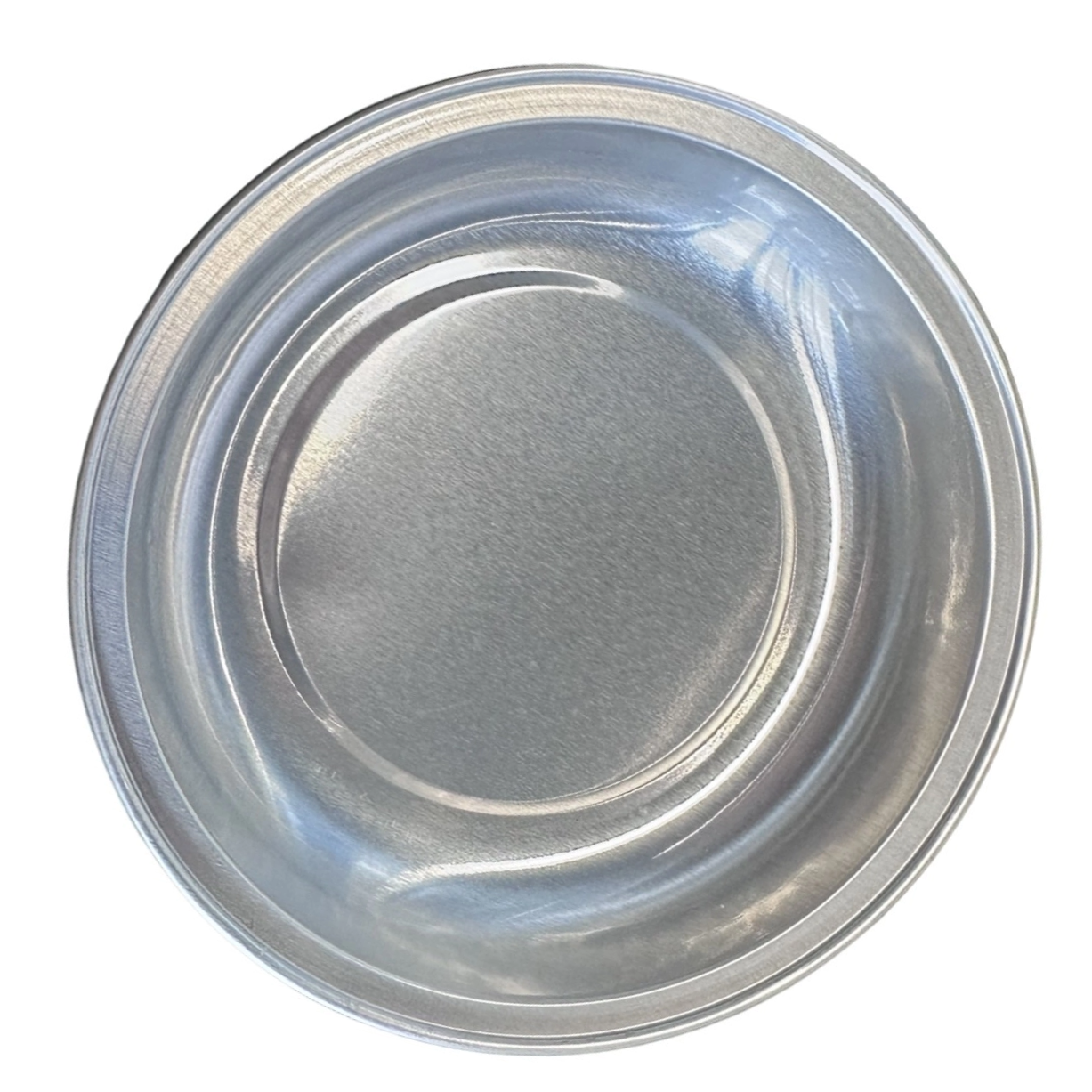
Volume selection determines the product's market positioning. You must align the container size with specific feeding occasions. Misaligned sizing frustrates consumers and hurts repeat purchases.
The market for mix-ins and liquid treats is exploding. Owners love customizing their pets' meals. Utilizing a 50ml round pet food container serves this niche perfectly. It holds just enough gravy or broth for one serving.
Slightly larger formulations benefit from a 63ml round pet food container. This size accommodates high-protein kitten formulas. It also works well for concentrated nutritional supplements.
Implementation Note: Small diameters challenge production teams. High-speed filling equipment must be calibrated carefully. Low-viscosity liquids tend to splash during rapid filling. Splashing contaminates the sealing flange. A contaminated flange guarantees seal failure during the retort phase. You must adjust nozzle height and fill speeds to prevent this.
Adult cats and small dogs require larger volumes. The 110ml pet food container acts as the industry sweet spot. It provides a complete, one-time meal. This volume entirely eliminates the need for plastic wrap or silicone fridge lids.
Margin Consideration: Standardizing on a universally accepted single-meal size yields financial benefits. It significantly reduces tooling costs for sealing machines. It also simplifies secondary packaging. Cartoning becomes much more predictable when you standardize your primary vessel.
Food safety remains the highest priority. Wet pet food must undergo rigorous thermal processing. Understanding how your packaging interacts with heat and pressure is vital.
Wet pet food requires sterilization at temperatures exceeding 121°C. This ensures the destruction of dangerous pathogens like Clostridium botulinum. The chosen packaging must withstand these extreme conditions. Structural integrity cannot fail. Barrier layers must not delaminate under intense heat.
Rigid cans endure internal pressure changes easily. Flexible foil trays and plastic cups behave differently. As the product heats, internal gases expand rapidly. This expansion threatens to burst the seal.
You require specialized retort equipment to manage this. Facilities utilize water spray or steam-air retorts. These machines apply precise external overpressure. This external pressure counteracts the internal expansion. Careful calibration prevents container deformation and seal bursting.
Consumers demand easy-peel lids. They dislike using knives to open pet food. However, the seal must survive the violent retort process. It must also survive rough distribution channels.
Formulating the right heat-seal lacquer solves this dilemma. The chemical bond must remain strong at 121°C. Yet, it must peel cleanly at room temperature. A poor lacquer causes the film to tear. Tearing frustrates the consumer and damages the brand experience.
Food safety regulations govern packaging materials strictly. You must ensure all food-contact surfaces meet rigorous standards. This includes lid films, cup resins, and foil coatings.
Common Compliance Mistakes to Avoid:
Scaling single-serve formats requires strategic capital allocation. You must evaluate upfront investments against long-term unit economics.
Custom tray shapes command premium shelf positioning. A unique silhouette helps your brand stand out. However, custom shapes require significant upfront tooling investments. Suppliers also demand high Minimum Order Quantities (MOQs) for custom designs.
Standard round containers offer a pragmatic alternative. They provide a faster, lower-risk route to market. Standard tooling already exists. This reduces your initial capital outlay drastically.
Transitioning from steel cans to lighter materials yields logistical benefits. Aluminum foil or plastic significantly reduces inbound and outbound freight weight. You can load more units onto a single pallet. This increased efficiency offsets some of the increased per-unit packaging costs.
Single-serve containers demand robust secondary packaging. Their peelable lids are relatively fragile compared to seamed metal ends. They cannot support heavy top-loads during transit.
Brands often utilize multi-pack sleeves. Retail-ready display cartons also prove highly effective. These solutions protect the primary container. They also provide valuable billboard space for retail marketing.
The shift to smaller formats presents lucrative opportunities. You must match the packaging material to your target consumer's specific feeding habits. Evaluate your facility's retort capabilities honestly before selecting a material. Standardized volumes help balance your unit economic goals effectively.
Next Steps for Implementation:
A: Shelf life depends heavily on the chosen material. Metal cans and single serve pet food packaging made of foil typically offer 18 to 24 months of shelf life. High-barrier plastics may offer slightly less time, usually 12 to 18 months, depending on their specific EVOH layers and oxygen transmission rates.
A: No. Traditional seaming equipment only works with rigid metal cans. Flexible trays and cups require specialized fill-and-seal machinery. You must invest in heat-sealing equipment capable of applying precise pressure and temperature to create reliable peelable bonds.
A: Smaller volumes naturally require shorter thermal processing times. A 50ml container reaches its core lethality temperature faster than a 110ml container. Additionally, highly conductive materials like aluminum transfer heat much faster than plastic, reducing overall cycle times and saving energy.


