
Views: 0 Author: Site Editor Publish Time: 2025-10-14 Origin: Site


You often reach for parchment paper when you want your baked goods to turn out just right. This non-stick paper resists heat and keeps your treats from sticking to pans. Many home bakers and professionals choose it because it helps cookies bake evenly, makes cleanup easy, and allows you to lift and cut bars neatly. Over the past decade, new silicone coatings and a growing baking culture have made parchment paper a must-have in kitchens.
Parchment paper is a non-stick baking paper. It helps baked goods come out of pans easily. This makes baking less stressful.
Parchment paper helps heat spread evenly. This means cookies and cakes bake perfectly. You will not get burnt spots.
Cleaning up is easy with parchment paper. Just lift it out of the pan and throw it away. This saves you time and effort.
Pick bleach-free parchment paper for a greener choice. It breaks down faster and uses fewer chemicals.
Parchment paper can be used in many ways. Use it to line pans, roll dough, or bake delicate treats like meringues and macarons.
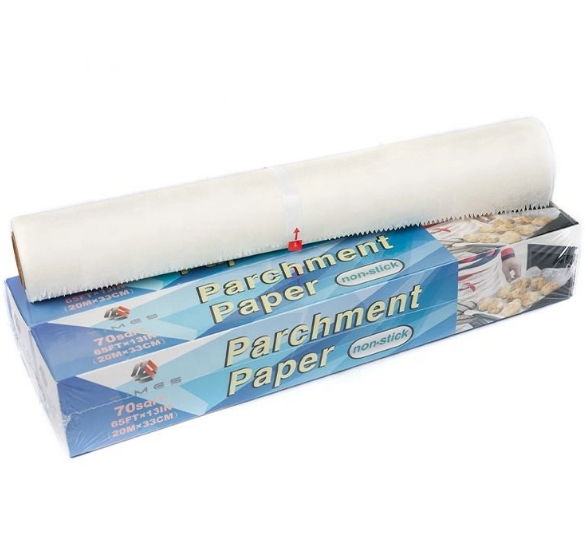
You might ask why parchment paper is so useful in baking. Parchment paper is a special baking paper made from plant fibers called cellulose. Makers add a food-safe silicone layer to the paper. This gives it some great features:
It keeps food from sticking, so cookies and cakes come off easily.
It can go in ovens up to 425°F without burning or melting.
The silicone stays safe and does not give off bad chemicals when heated.
People sometimes call parchment paper greaseproof paper. It stops oil and water from soaking through. This helps when baking things like meringues or macarons. Many people pick bleach-free parchment paper because it is better for the earth. Bleach-free paper breaks down faster and uses fewer strong chemicals to make.
Tip: Using parchment paper makes cleaning up much easier. It also helps your baked goods cook more evenly.
At Zhejiang Times Beyond New Material Technology Co., Ltd., we are proud to make baking parchment paper that meets top world standards. Our products have certifications like FDA, ISO9001, and BRCGS. We care about the planet and use good sources, so you can trust our products. Our baking paper and greaseproof paper are used by home bakers, restaurants, and bakeries all over the world.
You might see both parchment paper and wax paper at the store. They look alike, but they are not the same. Here is a simple guide to help you pick:
Parchment paper can handle oven heat up to 425°F. You can use it for baking cookies, roasting veggies, or lining pans.
Wax paper will melt or burn if it gets too hot. Only use it for wrapping food or covering things in the fridge.
Parchment paper does not stick and keeps out grease, so it is great for baking.
Wax paper is best for cold uses, like wrapping sandwiches or cheese.
Feature | Parchment Paper | Wax Paper |
|---|---|---|
Heat Resistance | Up to 425°F | Not heat-resistant |
Non-stick | Yes | No |
Greaseproof | Yes | No |
Best Use | Baking, roasting | Wrapping, storage |
When you pick parchment paper, you help make baking safer and better for the earth. Our company uses green methods and has certificates that show our products are safe and high quality. We think taking care of the planet is important for a top company.
Note: Using bleach-free baking paper helps keep the earth cleaner. Many people who care about the planet now choose these kinds for their kitchens.
If you want baking to be easy and neat, parchment paper is the best choice.
You want your cookies and cakes to come out of the pan easily. Parchment paper gives you a non-stick surface that helps baked goods release without breaking. This makes baking less stressful and more fun.
The non-stick qualities of parchment paper come from a special coating called polydimethylsiloxane (PDMS). Scientists have found that this coating can move slightly from the paper to your baked goods during baking, which helps prevent sticking.
Many types of baked goods benefit from this feature:
Cookies stay whole and do not scorch, even with sticky dough.
Cakes lift out of pans smoothly, so you avoid crumbling or tearing.
You can also use parchment paper to create different textures. For example, when you bake macarons, the paper can give them a smooth or patterned surface, depending on how you prepare it.
You want your treats to bake evenly every time. Parchment paper helps spread heat across the bottom of your baked goods. This means you get fewer burnt spots and more consistent results.
Parchment paper keeps the bottoms of cookies from burning by stopping fat from pooling.
The silicone coating stands up to high heat, so you do not have to worry about the paper catching fire.
Using the coated side of the paper gives you the best non-stick results.
You can trust that your cookies, cakes, and pastries will bake evenly and look great.
Baking can get messy, but parchment paper makes cleanup simple. You do not need to scrub pans or scrape off stuck bits. Just lift the paper and throw it away.
Parchment paper keeps pans clean by stopping batter and dough from sticking. You use less oil or butter, which means less greasy residue. Many bakers say that parchment paper saves them time because they can remove the paper and skip the hard cleaning. You can even use it as a workspace to catch flour and crumbs, then toss it out when you finish.
Many bakers discover that parchment paper is essential for avoiding the mess of stuck cakes and brownies. It turns cleanup from a chore into a quick, easy step.
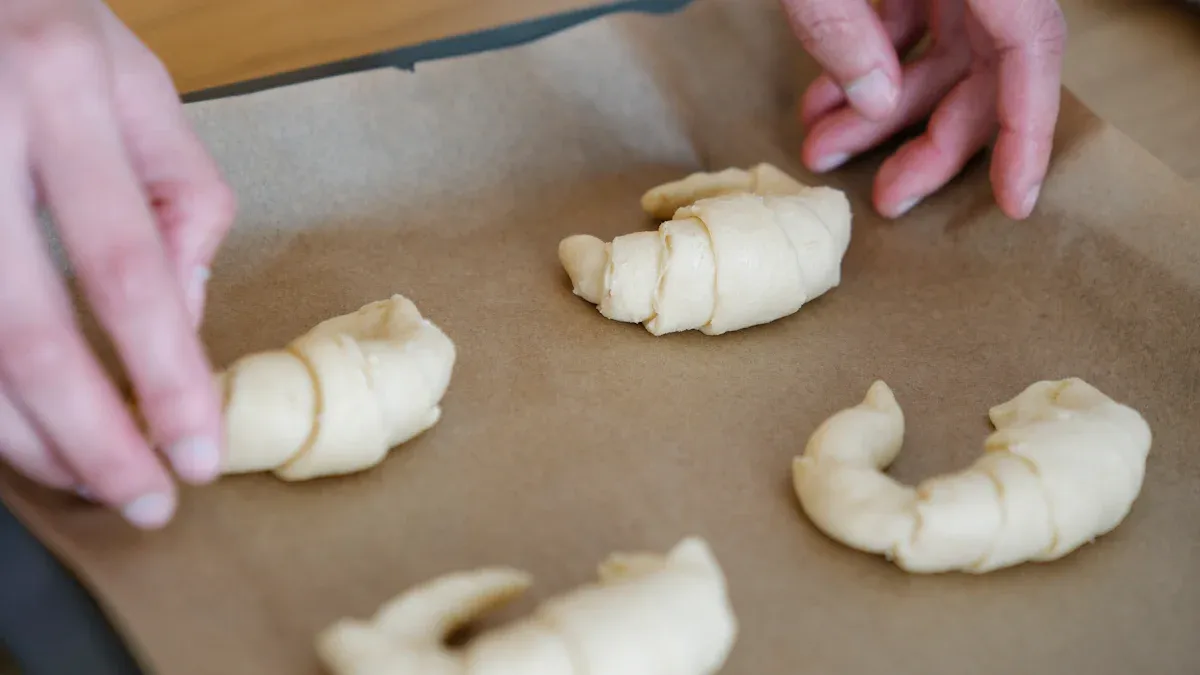
You usually line pans and trays with parchment paper first. This keeps baked goods from sticking to the pan. You can lift brownies or bars out without breaking them. Cutting them on a flat surface is easier. Fitting parchment paper into your pan stops batter from leaking. It also keeps your kitchen cleaner. Many bakers say lining cake pans with parchment paper makes cleanup easy. Cakes come out of the pan perfectly. To do this, trace your pan, cut the paper, and press it inside. This way, the paper fits well and there is less mess.
Commercial bakeries use parchment paper because it does not stick and can handle high heat. The bakery and confectionery industry uses it a lot, with a 67.3% market share. This shows how important parchment paper is for professional baking.
You can roll dough on baking sheets for a smooth experience. Parchment paper always lays flat, so you do not get bumps. The edges do not roll back, which makes things easier. It comes in many sizes for different pans and shapes. You save time because you do not need to cut or measure. You can use the same sheet for more than one batch. This saves money and helps the environment.
Advantages of Parchment Paper | Description |
|---|---|
Lays perfectly flat every time | Gives a smooth rolling surface with no bumps. |
No edges rolling back | Stops problems during baking. |
Comes in different sizes | Good for all pan sizes and shapes. |
Saves time | No need to cut from a roll. |
No hassle to measure | Makes getting ready easier. |
Reusable for multiple batches | Saves money and is better for the earth. |
You want treats like meringues and macarons to look and taste great. Parchment paper gives a flat, non-stick surface for these foods. This helps them have a better texture and look nice. Macarons get taller and have compact feet. Many bakers like parchment paper more than silicone mats, especially at lower baking temperatures. Parchment paper helps keep food good and clean.
Parchment paper is important for non-stick baking, even heat, and easy handling.
More people bake at home now, so baking sheets and parchment paper are common in kitchens.
You want your parchment paper to fit pans perfectly for the best baking results. Start by measuring your pan to choose the right size of parchment. If you use a cake pan, butter it first to help the paper stick and prevent shifting. Here are some easy ways to cut and fit parchment paper:
Cut a sheet that is at least as wide as your pan and add 8 to 10 extra inches for overhang.
Lay the parchment in the pan and trim any extra so it lies flat.
Secure the paper with binder clips if it moves around.
Lightly grease both the pan and the parchment for easy release.
You can also try special methods for tricky shapes:
The bikini method: Cut the sheet in half and place both pieces in the pan to cover all sides.
The origami method: Mark the corners, cut diagonally, and fold the sides to fit snugly.
Tip: A well-fitted parchment sheet keeps batter from leaking and helps you lift baked goods out easily.
Parchment paper works well for most baking, but you should know its limits. High heat can cause the paper to darken or become brittle, though it will not burn or release harmful chemicals. For best results, check the temperature rating before baking.
Temperature Limit | Description |
|---|---|
420-450°F | Most parchment paper is safe up to these temperatures. |
Up to 500°F | Use for bread or pizza if the paper is rated for it. |
Over 450°F | For long baking times, choose parchment rated for at least this temperature. |
Parchment paper is non-stick and heat resistant. You can use alternatives like aluminum foil or silicone mats, but wax paper is not safe for baking. Grocery bags are not food-safe and may leach ink into your food.
Always check the packaging for temperature limits. For recipes above 450°F or with long baking times, use parchment paper designed for high heat.
You get lots of good things when you use parchment paper in your kitchen. Many chefs say it is easy to use, can be thrown away after one use, and does not let food stick. It also works well in hot ovens:
Advantage | Description |
|---|---|
Convenient | You can use it right away and toss it out, so cleaning up is fast. |
Perfect for single-use | It is great for baking cookies, biscuits, or one cake at a time. |
Non-stick and heat-resistant | Food does not stick, and it can take high heat. |
Baking feels easier and more fun because:
Cookies and cakes come out of pans without sticking.
You do not have to clean as much.
Your baked treats look nice every time.
Pick parchment paper from trusted companies like Zhejiang Times Beyond New Material Technology Co., Ltd. for good results and to feel sure about what you use.
You can reuse parchment paper if it stays clean and does not burn. For cookies or similar items, you may use the same sheet for several batches. If the paper gets greasy or dark, use a new sheet.
You can use parchment paper in most ovens up to 425°F. Always check the packaging for the temperature limit. Do not use parchment paper under a broiler or on an open flame.
You can use parchment paper for steaming fish, roasting vegetables, or wrapping food for storage. Many chefs use it to separate layers of cookies or candies. It helps with easy cleanup in many kitchen tasks.
You can compost unbleached, plain parchment paper. If the paper has heavy grease or food residue, composting may not work well. Always check if your local composting program accepts it.
You should keep parchment paper in a dry, cool place. Store it in its original box or a sealed bag to keep it clean. Avoid places with moisture to prevent the paper from curling or sticking together.


