
Views: 0 Author: Site Editor Publish Time: 2026-05-14 Origin: Site


You spend hours preparing dough. You measure ingredients meticulously. You chill the mixture perfectly. Then, disaster strikes. You pull your pan from the oven. You find fused, burnt bottoms. This common baking failure breaks hearts everywhere. People often view pan liners as simple convenience tools. They are much more. They act as vital thermal barriers. They function as physical shields. Proper application is mandatory for success.
Resolving browning issues requires a comprehensive approach. You cannot simply throw paper on a pan. You must evaluate pan material. You must consider oven placement. You must select the right liner type simultaneously. This guide reveals the exact science of using proper tools. You will learn to control heat transfer effectively. You will engineer perfect golden bottoms every single bake.
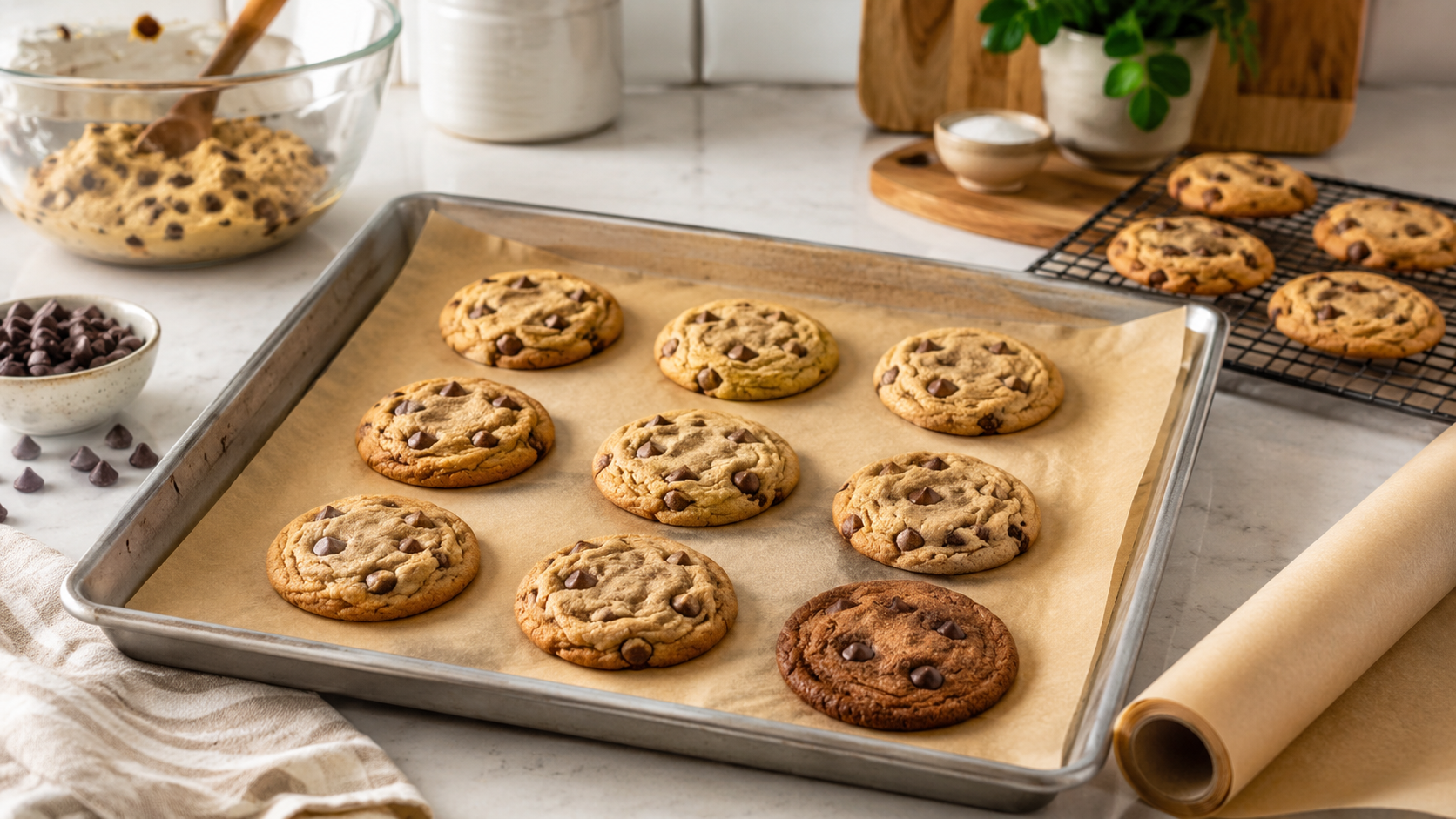
Heat limits: Standard parchment is coated with silicone (not wax) and is generally safe up to 425°F (220°C).
Thermal dynamics: Parchment provides a non-stick surface but does not completely insulate against thin or dark-colored baking sheets.
The 1-minute rule: Cookies continue baking on hot pans outside the oven; parchment allows for immediate, safe transfer to cooling racks.
Cost-to-outcome: Flat-lay or pre-cut parchment sheets offer better scalability and less frustration than tightly rolled varieties.
Bakers often misunderstand non-stick properties. They confuse them for heat protection. A liner prevents sticking reliably. It stops dough from fusing to metal. However, it cannot fix a fundamentally flawed baking environment. You must address the root causes of uneven heat.
True baking parchment features a specific chemical treatment. Manufacturers apply a food-safe silicone coating. This creates a highly effective hydrophobic layer. It repels high-sugar doughs easily. Molasses or oatmeal cookies release perfectly. You add zero extra grease. Using high-quality parchment paper for cookies guarantees easy release. The silicone handles caramelized sugars beautifully. The sugars cool and slide right off.
But risks exist. You must respect material limitations. Direct contact to heating elements causes singeing. Oven walls burn exposed paper edges instantly. Never substitute wax paper. Wax melts under high heat. It smokes terribly. It poses a severe fire hazard. Wax paper strictly belongs in the refrigerator or freezer.
Pan interaction also matters immensely. Dark baking sheets absorb heat rapidly. Thin pans offer zero insulation. Placing a liner on dark, thin metal guarantees failure. Rapid heat absorption still burns bottoms. The liner only prevents sticking. It does not stop aggressive thermal transfer. You need thicker, lighter-colored pans for optimal results. Combining good pans and proper liners yields professional outcomes.
Isolate the variables causing uneven results. Apply specific corrective measures immediately. We categorize solutions into physical, temporal, and thermal fixes. Identifying the exact failure point saves future batches.
Post-bake heat management ruins many perfect bakes. Pans stay extremely hot outside the oven. Dough left on hot metal continues baking. Bottoms will darken quickly. You must adopt a strict standard operating procedure (SOP) for removal.
Remove the hot pan from the oven carefully.
Rest the batch on the counter for 30 to 60 seconds. This brief pause sets the crumb structure.
Grab the overhanging paper edge firmly.
Slide the entire batch onto a wire rack simultaneously.
This sequence stops the cooking process instantly. It relies entirely on the structural integrity of the paper. Without it, you would scrape individual pieces individually. The first piece might survive. The last piece would burn.
Some ovens feature aggressive bottom-heating elements. They scorch bottoms aggressively despite your best efforts. Employ the double-pan strategy here. Stack two identical baking sheets together. Place your liner on the top sheet. This creates an air-gap insulation layer. The air slows thermal transfer significantly. The bottom pan takes the direct heat hit. The top pan heats gently and evenly.
Temperature control pre-bake is equally critical. Warm dough spells disaster in any oven. Chill your dough for 30 minutes minimum. Cold temperatures stabilize the butter structure. Cold butter melts slower in the oven. This reduces premature spread. Thin edges bake too fast. Thicker edges resist burning. Proper chilling ensures the center cooks before the edges fry.
Sometimes you face the opposite problem entirely. Your barrier insulates too effectively. Bottoms emerge pale and soft. They lack essential Maillard browning. They look underbaked and unappetizing. Address this reverse pain point strategically.
You need targeted heat adjustments. Check the bottoms near the end of your timer. If they remain pale, take immediate action. Move the oven rack downward. Place it in the lower third section. Do this for the final three or four minutes. This proximity increases bottom heat exposure. It forces the Maillard reaction to accelerate. You achieve a golden color without overcooking the top.
Ingredients also dictate coloration heavily. Review your recipe carefully. High vegetable shortening ratios stall browning. Shortening lacks milk solids. Milk solids in butter brown beautifully under heat. Shortening simply melts clear. If you use shortening, expect paler results naturally.
A barrier layer compounds this pale effect. You may need longer bake times. Consider swapping partial shortening for real butter. This introduces necessary proteins and sugars. These compounds react to heat wonderfully. They deliver the classic bakery appearance.
Evaluate your options critically before starting. Compare them across thermal conductivity. Look at reusability. Assess dough compatibility. This logic helps you shortlist the best tool for specific recipes.
Material | Thermal Conductivity | Reusability | Best For |
|---|---|---|---|
Parchment Paper | Exact / Neutral | 2-3 Batches | Delicate, high-sugar doughs |
Silicone Mats (Silpat) | Low (Heavy Insulator) | Infinite | Thick, sturdy bakery-style bakes |
Aluminum Foil | Extremely High | Single Use | Avoid for baking; use for roasting |
The classic paper roll reigns supreme for delicate items. It handles high-sugar recipes flawlessly. Choosing reliable parchment paper for cookies offers exact heat transfer. You add zero grease. Cleanup takes seconds. You can reuse a single sheet safely. It usually survives two or three batches. Structural degradation happens after prolonged heat exposure. The paper becomes brittle and brown. Discard it once it turns dark.
Silicone mats present a different profile completely. They cost more initially. You can reuse them infinitely. However, exercise extreme caution. Silpats contain a thick fiberglass core. This core acts as a heavy insulator. Heavy insulation alters bake times significantly. You often need extra minutes. Dough spreads less on silicone. This creates thicker, sometimes doughy centers. Adjust your expectations and timers accordingly.
Aluminum foil carries extremely high risk. Foil conducts heat aggressively. It accelerates bottom baking dangerously. You must add oil or butter to prevent sticking. This creates a frying effect. Bottoms fry and burn rapidly. We strongly advise against foil. It ruins delicate textures. It causes immense frustration during cleanup.
Theory means nothing without execution. Everyday implementation reveals unique physical challenges. Rolls of paper cause endless frustration. Curled edges make dough slide around. Uneven surfaces warp the final shape. You need proven handling hacks. Achieve batch consistency effortlessly.
Master these specific physical techniques:
The Tension-Release Hack: Rip a piece from the roll. Crumple it into a tight ball. Un-crumple it carefully. Smooth it out flat. This destroys the paper's physical memory. It will lie completely flat on your pan.
Dough Anchoring: Flat sheets need securing. Pipe four small dabs of raw mixture. Place them under the four corners. Press down lightly. This acts as edible glue.
Water Mist Vacuum: Mist the bare pan lightly. Use a microscopic layer of water. Slap the sheet down. The water creates a temporary vacuum seal. The sheet locks into place instantly.
Pre-Cutting for Scale: Stop tearing sheets mid-bake. Pre-cut your liners perfectly. Match the exact inner dimensions of your pan. Proper sizing prevents edge-browning.
Advanced scaling requires operational preparation. Pre-cut sheets allow rapid batch-swapping. You slide the old sheet off. You slide the new sheet on. You never wait for the primary pan to cool. You load the next batch onto a fresh, cool sheet on the counter. Then, you transfer the whole sheet onto the cooled pan. This maximizes oven uptime. It protects the butter temperature perfectly.
Successful baking requires precise control. It relies on accurate temperature measurement. Correct pan thickness provides a stable baseline. The physical barrier seals the deal. You must combine these elements seamlessly. Relying on one single factor invites failure.
Take immediate action today. Audit your current baking equipment. Inspect your baking sheets carefully. Discard severely warped pans. Throw away darkened, scratched metal. Upgrade your prep station immediately. Ditch the annoying rolls. Invest in pre-cut, flat-lay sheets. This ensures true operational consistency. Your workflow will improve drastically. Your bottoms will emerge golden and perfect every time.
A: Yes. Provided the paper is not charred, brittle, or heavily soiled with burnt sugar, a single sheet can handle 2-4 consecutive batches. Inspect the edges between rounds. If it cracks or turns dark brown, discard it immediately to prevent off-flavors.
A: Bleached (white) is treated with chlorine for aesthetics. Unbleached (brown) is entirely chlorine-free. Both perform identically regarding non-stick capabilities and heat resistance. Choosing between them is strictly a matter of environmental preference and visual appeal.
A: Parchment provides a slick surface. If dough is too warm or the baking sheet was not cooled between batches, the butter melts before the flour structure sets. This causes excessive spread regardless of the paper. Always chill dough and use cool pans.


